
Flags where the eye already is
Condition flags show on the roster row before anyone clicks. Tier decides prominence and a per-tag semantic decides colour, so red is spent on genuine urgency and still means something.
For memory care communities
Elopement risk, falls risk, behavioural triggers and code status belong on the roster row — not three clicks into a chart nobody opens mid-incident.

The reality
/residents/{resident}/emergency 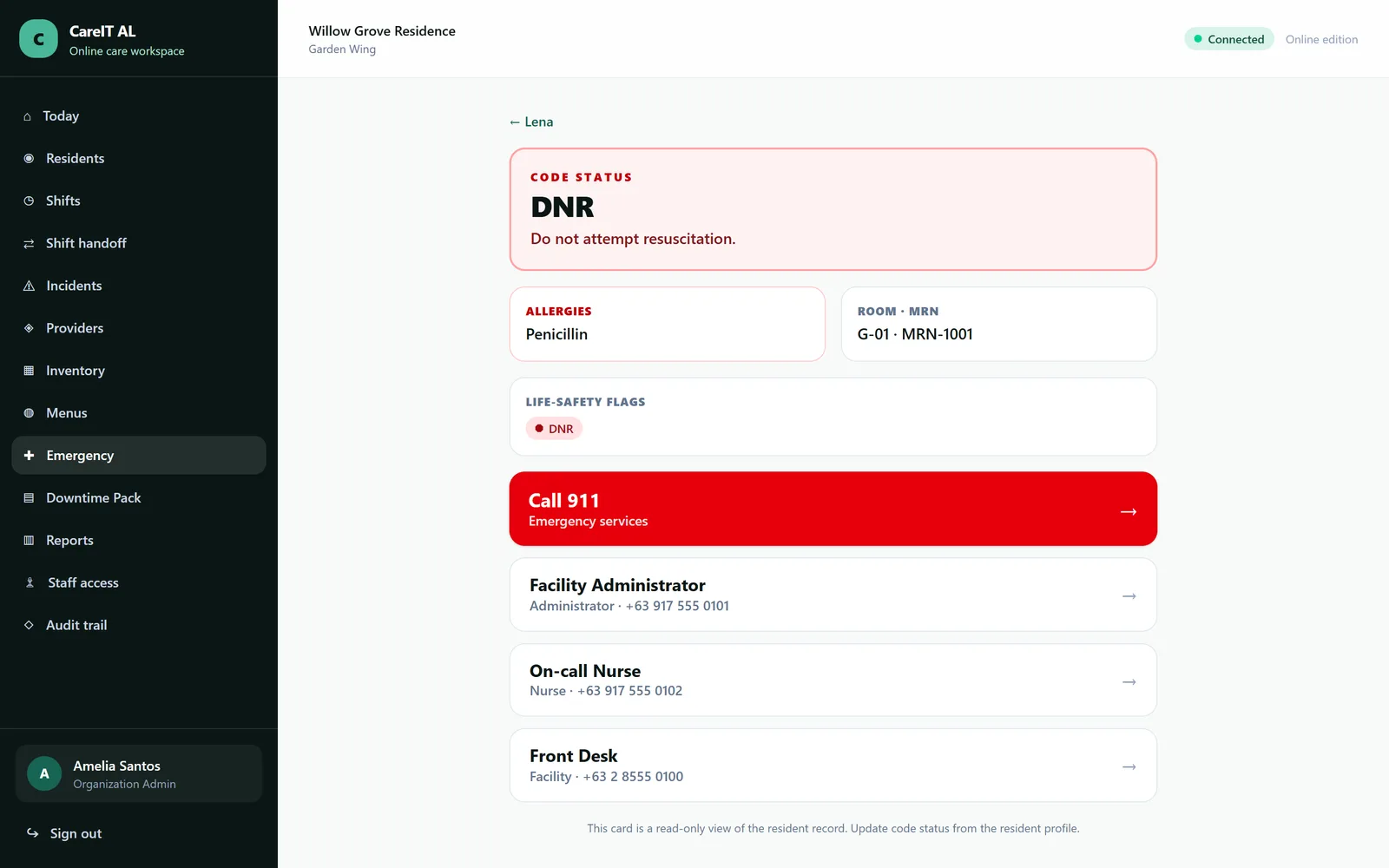
How CareIT AL fits
Condition flags show on the roster row before anyone clicks. Tier decides prominence and a per-tag semantic decides colour, so red is spent on genuine urgency and still means something.
Code status, allergies, conditions, medications and contacts on one page a paramedic can read — structured, never free text, and printable for the ride to hospital.
Filing a fall schedules the neuro observations and chases them. The system asks for the check; it does not rely on a busy floor remembering the interval.
The handoff is assembled from the shift rather than retyped from memory, and the incoming staff member's acknowledgement is recorded.
Incidents are structured records with severity, type, time and location — so "falls after dinner in the east wing" is a filter, not a research project.
Also built for
A walkthrough from the perspective of someone who has never met these residents before.